Carrier Info
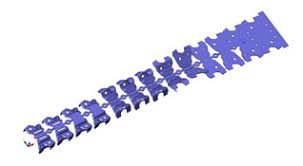
The material that carries the parts through the progressive dies is sometimes called the carrier, or webs, strips, or ties. It connects and transports the part to each die station.
There are several different types of carriers that allow for different processes on the part.
- Your carrier width should be twice the material thickness. Larger dies may require larger carrier widths so the strip can be pushed through the die.
- If more than one carrier is used, try to design with consistent lengths to prevent the strip twisting
- Carriers must accommodate any stretch or bend necessary during any of the press operations. These loops should be designed with as large a radius as possible but still allow for any necessary clearances
- Attach the carrier where it can be removed easily and cleanly.
- Use stiffening beads to carriers or lance form the edge when large parts are being fabricated from thin materials
- How every component is carried will directly impact how well you feel the raw material, whether you lift the strip during feeding and the output’s quality and consistency. Carrying components requires specific configurations. Your other option is to carry the part on one side of the strip. However, lifting the strip is harder in this case. You will need lifters at the center of the strip.
- Another option is using the ladder style to carry the component. This works better for complex components or those that need more lift. Engineers work on the tool and die design and must ensure the appropriate carrier is used for this task.
|
No Carrier |
|
|
|
Single Edge |
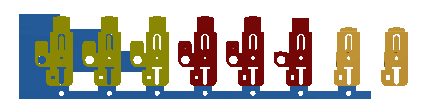
Attached to the stamped part on one side only
|
 |
|
Center |
|
 |
|
Double Edge |
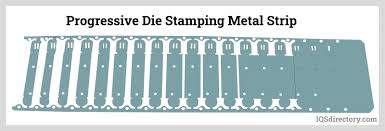
Attached to the stamped part on both sides with no conter connector |
 |
|
Frame |
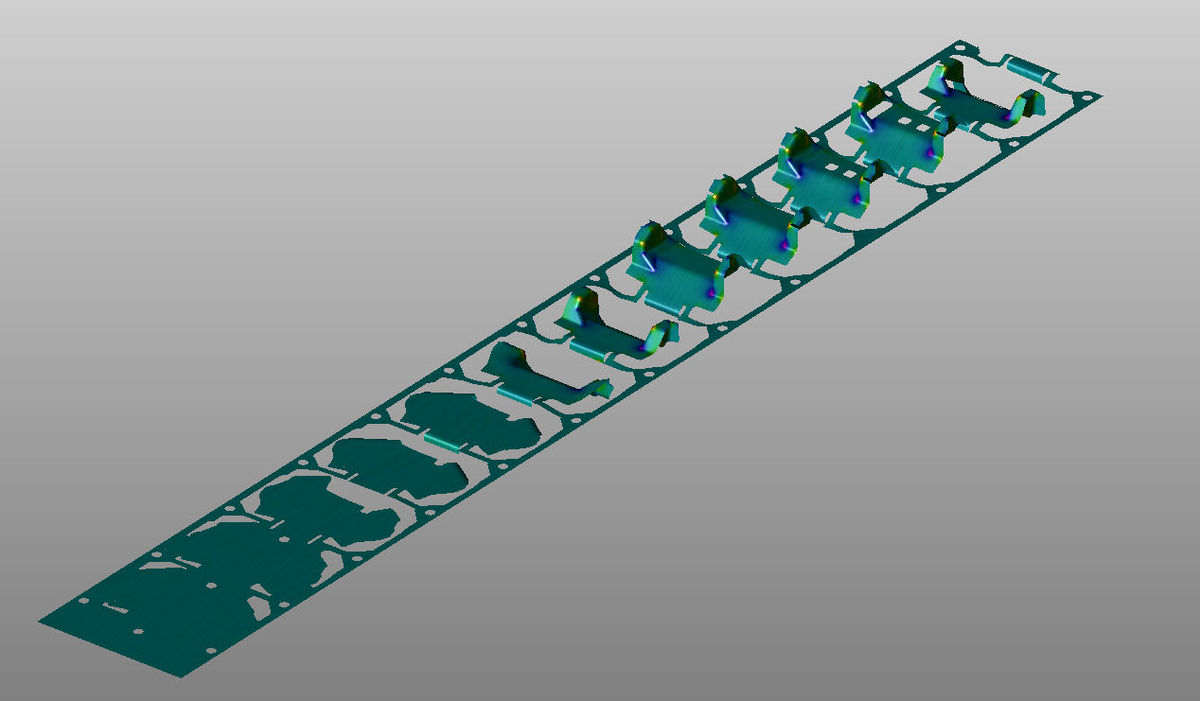
Attached to the sides of a stamped part to allow work to be performed on or around the center of the strip.
|
 |
